

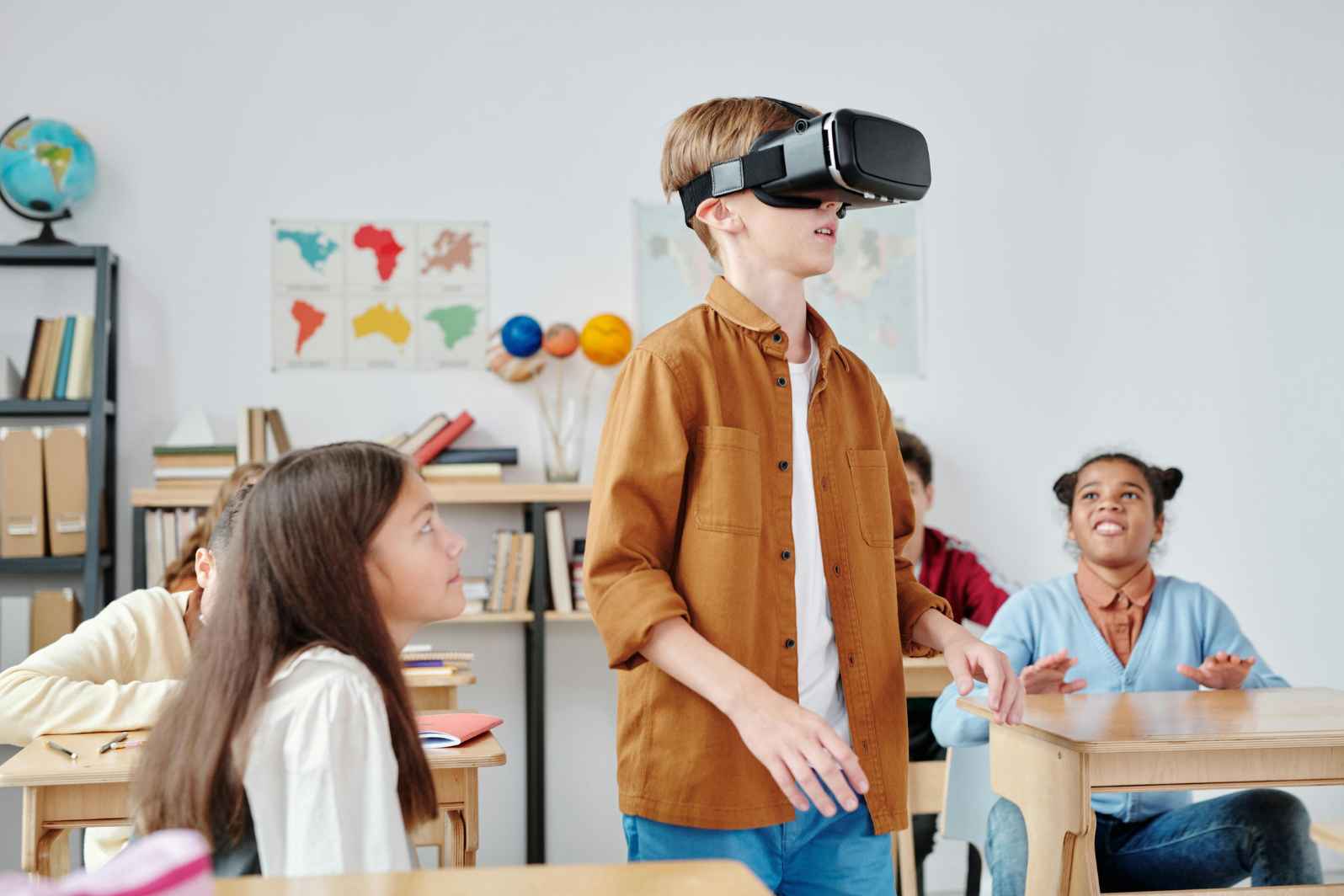
We’ve always loved those outings where we have the chance to get out of school. They offer students the opportunity to learn beyond the classroom. But organizing actual trips is not always straightforward. The cost, distance and safety concerns often preclude schools from taking children on such trips. This is where VR comes in. Instead of just teaching a history or science lesson, take your students on a field trip that many have never experienced and show them what it’s like to live in another time period.
What Are VR Field Trips?
Digital VR field trips are learning experiences that deploy virtualreality headsets or apps to deliver students to various locations. They can visit a Japanese historical site or walk the surface of Mars, or even dive under the sea from their classroom. The 360-degree sights and sounds make students feel like they are there.
Making History Come Alive
Reading about history alone can be boring for some students. But VR changes this completely. Picture yourself standing in front of the Taj Mahal in Mughal days, or witnessing construction of the Great Wall of China. Through VR, students can experience the way people lived, and what they were wearing or watching. This helps them develop a more substantive understanding of history, and supports their ability to remember it longer.
Exploring the World of Science
Science is more interesting to students when they can “do” it. With VR, they can glide inside the human body to watch how the heart pumps blood. They can journey to volcanoes, see the solar system up close or conduct experiments. If an experience such as this takes place, science concepts become understandable. They also promote curiosity and critical thinking.
Benefits of VR Field Trips
1. Economical: No buses, tickets and permissions mean money saved for the school.
2. Learning safely: Kids are able to freely traverse environments that may be dangerous in real life, such as space or volcanoes.
3. Inclusion: Students unable to travel, due to personal health or otherwise, can still take the trip.
4. Improved memory: Students are able to remember lessons for a longer period of time when they participate in interactive presentations.
5. Engagement: VR pulls in even the most unfocused students.
Challenges of VR Field Trips
As with any emerging technology, VR has its hurdles. Headsets and software are expensive for schools. These materials require teaching to use them effectively. And some students may get dizzy when they use VR for an extended period. But as technology becomes cheaper and easier to use, these problems will diminish.
The Future of Learning
VR field trips are just one starting point. In the coming decades, classrooms might use augmented reality (AR) and mixed reality (MR) for more immersive experiences. Those instruments will let students not only see history and science, but interact with them in real time. This would revolutionize education as we know it.
FAQs:
Q1. What is a VR field trip?
A VR field trip is a virtual experience that allows students to explore places and events with the help of virtual reality technology from within their classroom.
Q2. How does a VR field trip help learn history?
They allow students to see historical events, monuments and cultures in 3D — furthering engagement when it comes to history lessons.
Q3. Could VR field trips replace real ones?
No, authentic trips are worth something. But virtual field trips can be a robust substitute when actual field trips are infeasible.
Q4. Are VR field trips safe for students?
Yes, it is safe as long as students keep the VR headsets on under supervision and for a limited time to prevent eye strain or dizziness.
Q5. Are expensive pieces of equipment necessary for schools to go on VR field trips?
Sure, some of the equipment can be pricey, but plenty of budget-friendly VR apps and headsets are out there. Prices are also declining over time.
